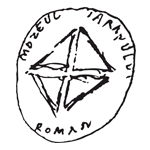
The Museum of Ethnography, National Art, Decorative Art, and Industrial Art was established by Royal Decree no. 2,777 of July 13, 1906. At the proposal of the Minister of Education and Religious Affairs, Mihail Vlădescu, Alexandru Tzigara-Samurcaș was appointed director starting October 1, 1906.
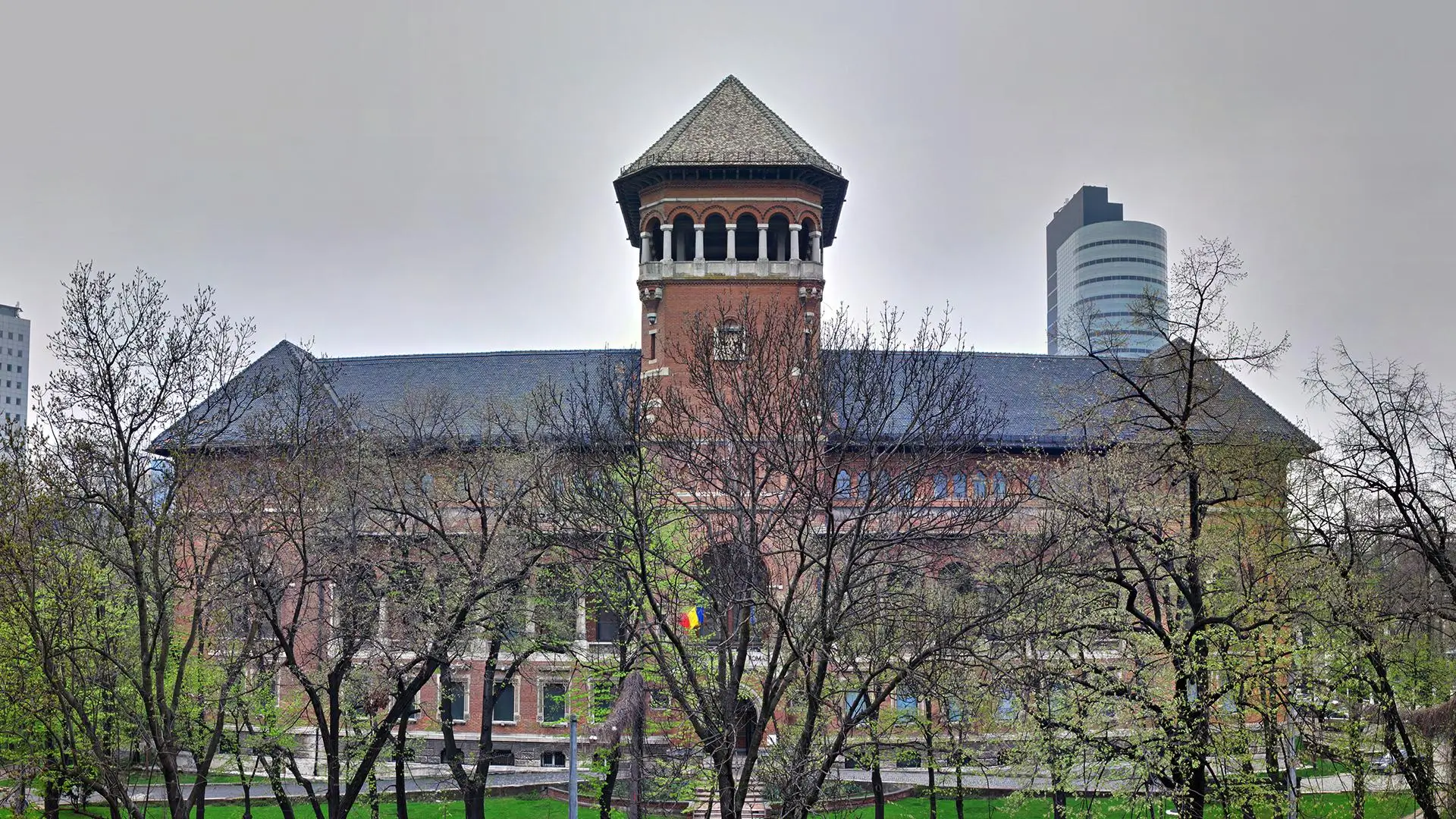
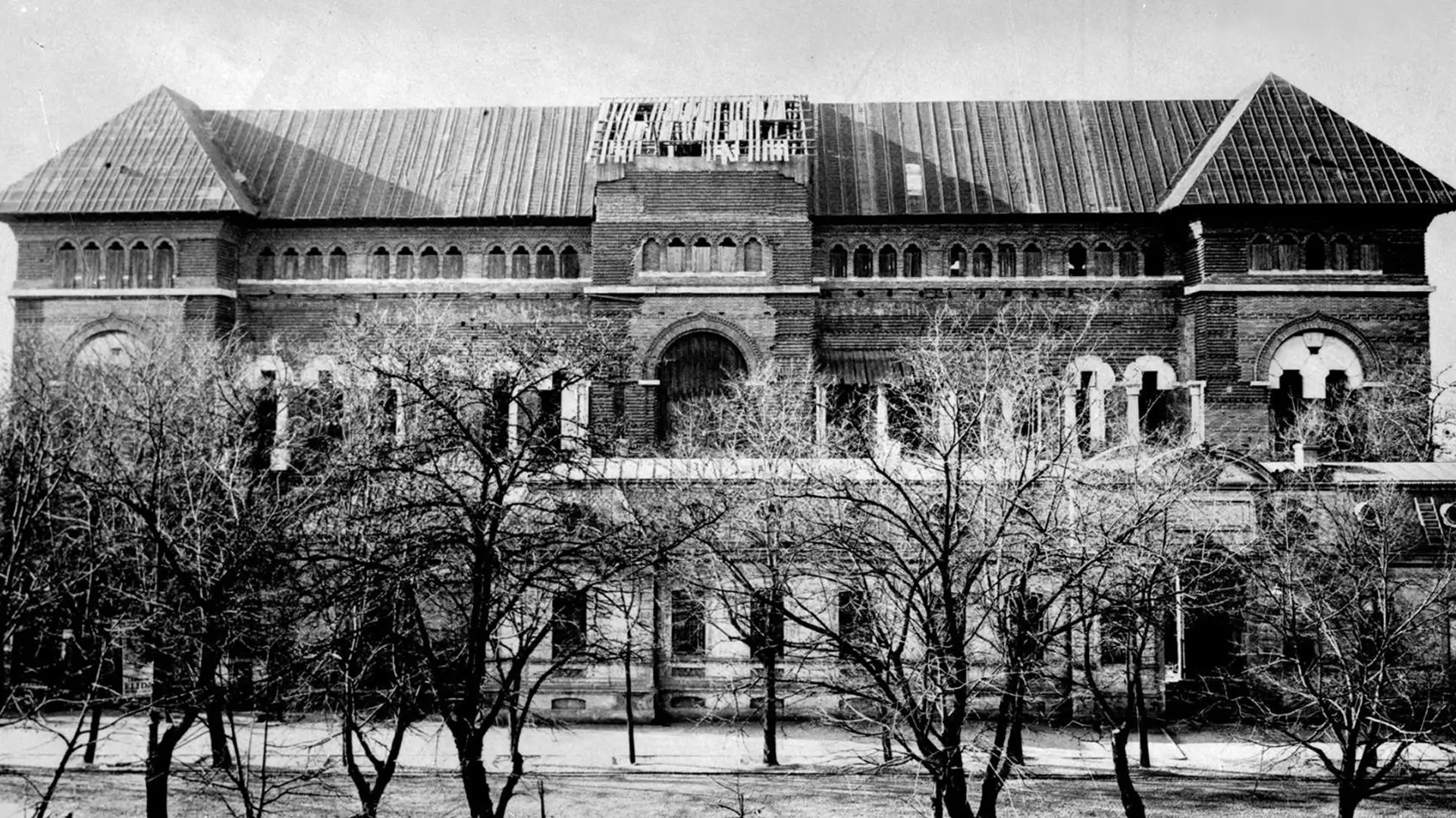
The Museum of Ethnography, National Art, Decorative Art, and Industrial Art operated on the site of the former state mint until 1912, when the foundation stone was laid for what would become the “neo-Romanian” building of the Museum on Șosea—as Bucharest locals affectionately called it for a long time. However, the completion of the building would have to wait for several decades, having to overcome the adversities of the times and of people. From the early 20th century to the present, the Museum on Șosea has always remained relevant, its history accompanying and reflecting the national construction and its vicissitudes.
This history, in a way, begins before the institutional establishment of the museum, shortly after the appearance of the United Principalities. During this early period of nation-building, the Peasant had already become a central symbolic reference for our identity, and peasant culture began to increasingly attract the interest of city dwellers. To give an impetus to “domestic industry,” which was suffering from competition with foreign products (which were fashionable and, moreover, cheaper due to industrial manufacturing), Al. I. Cuza issued an ordinance in 1863 for organizing exhibitions that would include products of peasant domestic industry. Thus, on May 20, 1863, under the leadership of Ion Ionescu de la Brad, the “national exhibition at Moșii of cattle, flowers, vegetables, agricultural and industrial products” opened at Obor. The first private collections appeared, as well as national exhibitions and Romania’s participation in world fairs. The idea of a national museum, which would mainly house the artistic products of the Romanian people, began to be considered.
“To sketch a family tree you must first designate some ancestors,” wrote Irina Nicolau in recounting the history of the National Museum of the Romanian Peasant. And that distant ancestor was the National Museum of Antiquities (established in 1864 by the same Al. I. Cuza). In 1875, at the proposal of Titu Maiorescu, “a special section was organized to display textile artworks made in the country: clothing, carpets, linens, broadcloths, etc.” The exhibits came mainly from the collection of Lieutenant Colonel Dimitrie Pappasoglu, who had already organized a small museum in a pavilion of his house in 1864. Several objects in the current MNȚR collections date from that period.
However, these early museum attempts were made without any order and without a real museographic vision, which led Tzigara-Samurcaș to ask rhetorically: “Are we worthy of a national museum?” He dedicated his life to answering this affirmatively and to realizing this goal of a “true national museum.”
The “Museum of Ethnography, National Art, Decorative Art, and Industrial Art,” which was actually the first name of the museum, was considered by Tzigara-Samurcaș as “prolix and needlessly complicated.” The vision of the purpose and arrangement of such a museum crystallized over time, also being expressed through a change of name to “Museum of Ethnography and National Art” and then to “Carol I Museum of National Art.” Peasant art had become national art!
The Museum on Șosea continued its historical journey even after the fundamental changes following the Second World War. Narrowly avoiding being turned into a barracks for the “liberating army,” the building became, starting in 1953, the Lenin-Stalin Museum, then the Museum of the Romanian Communist Party, of the Revolutionary and Democratic Movement in Romania, and, more and more, in the last years of the communist regime, a sort of museum tribute to President Nicolae Ceaușescu. The collections were evicted from their headquarters, temporarily housed in the Știrbey Palace on Calea Victoriei—where they formed the Museum of Folk Art of the Socialist Republic of Romania under Tancred Bănățeanu—and then crammed into the storerooms of the Village Museum. There, they awaited better times, in relative oblivion.
Those better times came immediately after the 1989 revolution. On February 5, 1990, a new, inspired minister, Andrei Pleșu, made a new founding act by appointing—at the insistent recommendation of Dan Hăulică—the painter Horia Bernea as director of the newly (re)established Museum of the Romanian Peasant.
“We started making lists of names for the new museum,” recalled Irina Nicolau, one of Horia Bernea’s main collaborators, in her diary. “What should we call it? What’s more appropriate? Oh, why didn’t we keep the paper! I know for sure that Horia had numbered them and that we reached some twenty-odd names. The name Muzeul Țăranului Român slipped by him, but he didn’t like it. After a few hours, this very name was chosen, which, at least in the early years, annoyed many people. ‘Peasant’? That’s pejorative, claimed the French. ‘Romanian’? That’s restrictive and politically incorrect, claimed others. Later, we ourselves regretted not having named it simply The Peasant Museum.” And further: “After a year and something, we were still trying to add a subtitle to the name—National Museum of Arts and Traditions. We gave up. All for the best: otherwise, we would have joined a family of European museums with which we have nothing in common.”
Indeed, the Museum of the Romanian Peasant is not an “ethnographic museum” in the classic sense of the word. Quite the opposite. “We will study the village, the contemporary man, the peasant as he is,” declared Bernea, “but we will only understand what happened if we have, well configured in the museum, the ‘model’—the traditional village.” Open to change and to the “present time”—to the point of scandalizing classical museographers—the Museum of the Romanian Peasant insists on maintaining a firm and permanent anchoring in this archetypal “model.” The museum’s name can thus be misleading: it is not a “society museum” that faithfully presents the life and creations of peasant communities from specific regions and periods of the country, but what Irina Nicolau called “the traditional man” and what Gabriel Liiceanu considers to be “the universality of the human type represented by the peasant.” The Museum of the Romanian Peasant is thus a museum of a somewhat timeless spirituality, with which its founders were clearly enamored and which they proposed as a possible reference point for today’s world.
This rather universalist than particular-ethnographic vision actually brought great international recognition in 1996: the EMYA award for European Museum of the Year. On the other hand, through its temporary exhibitions and both old and new collections, through its already traditional fairs and promotion of “the Romanian peasant’s products,” through its activities with children and soon with the elderly, through the diversity of its cultural actions (book launches and debates, concerts and anthropological films, colloquia and cultural evenings, etc.), the National Museum of the Romanian Peasant strives to remain ever relevant.