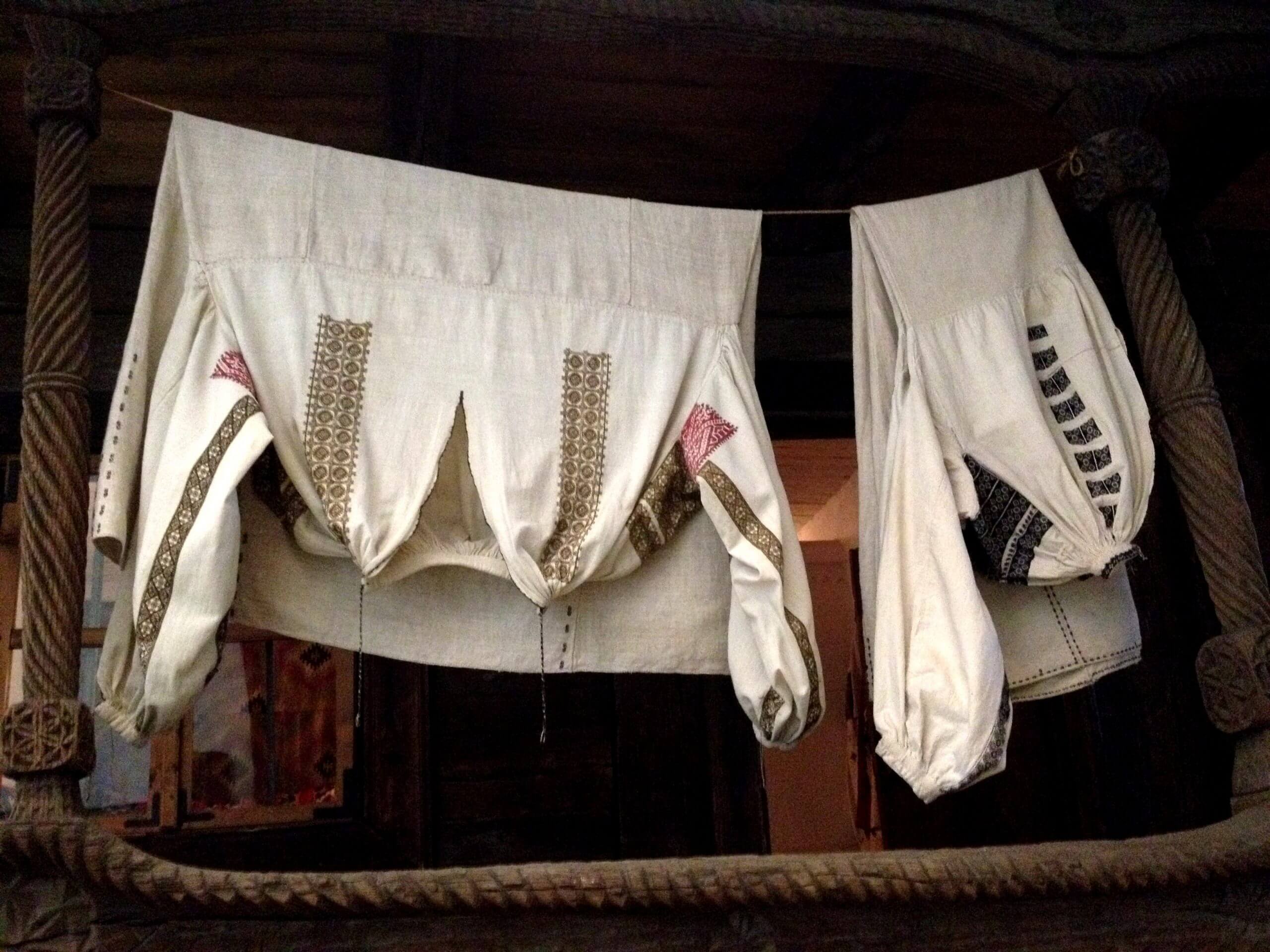
I was put in this position, and perhaps God has given me this gift, to create a museum about something old.
To make a museum in the sense of intuiting it, imagining it, giving it spirit.
At the center of our museum I placed the “icon” of the peasant and, in its very name, the word peasant. I am dominated by a strong faith in the values of peasant art, in its relevance, and by respect for these people who did not know how to defend themselves.
When you have to conceive a museum that has already existed, in a building that already exists, with a heritage largely gathered by predecessors… You look at objects and objects, and books and books for a long time, and you imagine a museum you yourself would like to visit, composed of these things. Then you think about the building, its place in Bucharest, its rooms… You start to propose possible themes, themes that could come alive in such a space “sung” by the objects hidden in the storeroom. Objects have a multitude of possible connections; you must eliminate a lot, get down to two or three viable instances that link them all; then you revisit the heritage, look again at the photos, listen to music, and begin to eliminate as you consider a theme.
You always think about everything that has been destroyed in this country, what is needed, what you can do, what responds to an essential need of today’s person (whether they know it or not). You revisit objects and a broad but unambiguous theme takes shape: the Cross. I thought it was right to inaugurate the museum halls, in the new museum, the “peasant’s museum,” with a display that is serene, broad in its message, and balanced in style. After decades of enormous destruction inflicted on the peasantry by communism, a “political” and harsh exhibition, a reckoning with the horrors endured by the Romanian village, might have seemed necessary. We did not take that path, justified though it would have been, but full of verdicts, a path strewn with tensions and adversities. Nor would a response of vengeance from the new museum have been truly Christian! We would have begun the new life with a sad sign, under the black light of revenge. The Cross was the most appropriate, the most full-of-life theme we could find. Why demonstrate the omnipresence of the cross? So that people draw the conclusion that they cannot live without the cross…
Here we make a public gesture, we feel the need to affirm the CROSS in a moment such as the present. To choose this theme is, as I said, a confession. It means to reaffirm the omnipresence of the cross, its importance and power today, in a lost, secularized, and often demonized world. It is a militant act. In our case, it is a militant act.
How does an act of confession become a confessional museography? By creating a museography that addresses, first of all, the heart. It appeals far more to an intelligent affect, so to speak, than to dry reason.
An organic museography follows orderliness, not order.
What we have done and want to continue to do at the Peasant Museum has nothing to do with gratuitous play, with certain “borderline” phenomena of the contemporary world such as “installations,” assemblages, etc., even if there are external elements in common. What categorically differentiates them is the given element, the heritage, which is tyrannical in its action, but which we “tame” with love and knowledge, giving the feeling of a light and graceful movement, with all the tension that appears throughout the discourse.
A museum in a permanently nascent state, with a disposition that allows for perpetual beginnings.
An experimental character. Not an experiment as play, but a desire to deepen without the sufficiency of already knowing. A fresh look at the phenomenon. The burden of tradition, not the burden of clichés.
A parallel can be drawn between how the scientific experiment is conceived in modern science and the museum. The same isolation in a neutral medium, the same falsification imposed by the discipline of experiment...
I have said before that I fear a rigorous plan, just as I fear plans when I paint. Too precise a formalization impoverishes. A rigorous plan, in the museography I seek, is useless.
Yes, I, who read the labels in a museum I have never seen before, here I will use few labels. The objects will be linked by relationships that labels would disturb.
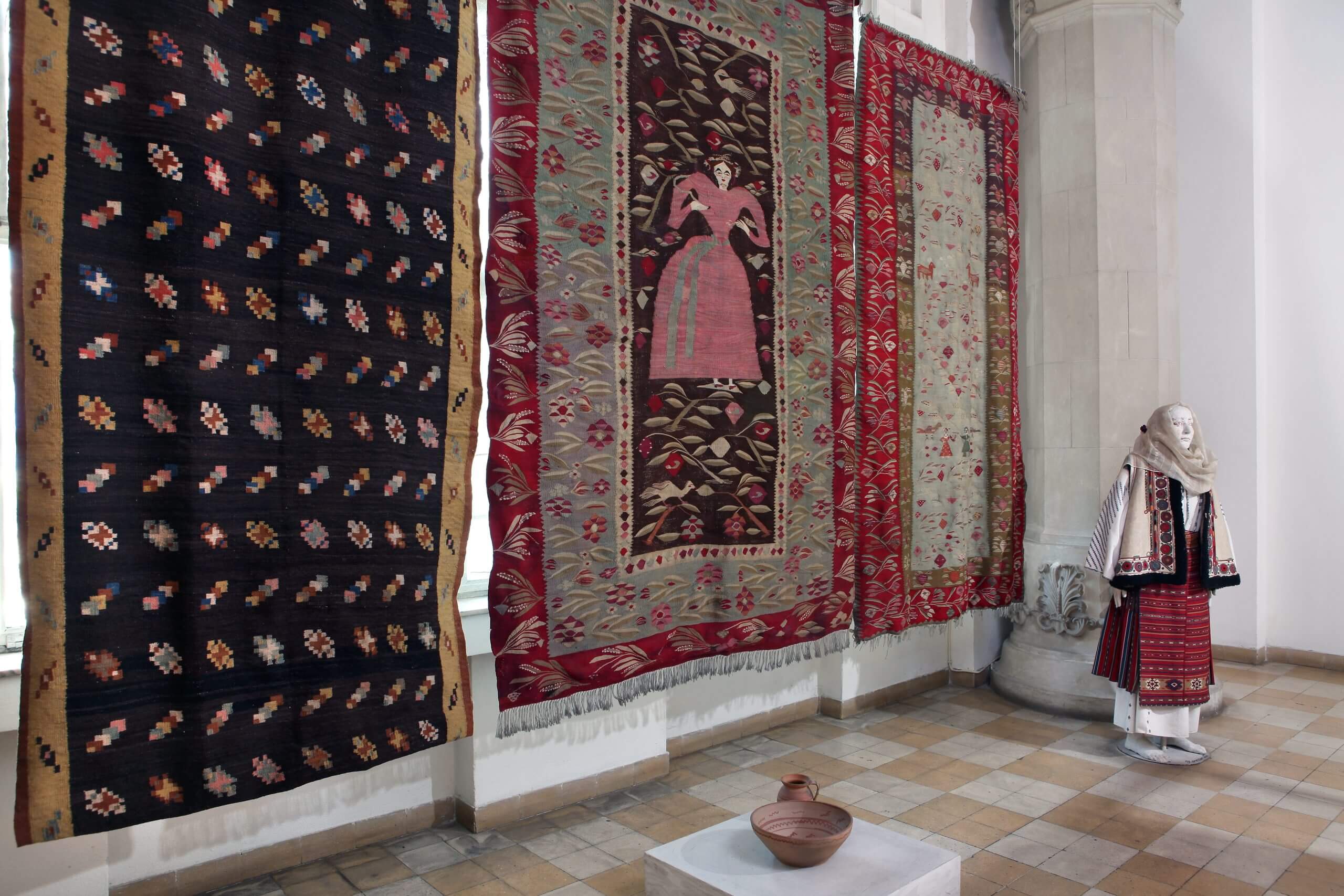
For such a museography, the concepts of “strong” and “weak” articulation seem essential. A loom, for example, is a powerful object, impressive in its materiality and formal coherence, in its clear expression of its function. It can thus be placed in the area of “strong” articulations, of generally perceived evidences, and will be used when we need to articulate a complex of subassemblies: various weaving tools, any kind of textiles. It can articulate two spaces that seem causally or functionally unrelated.
A “weak” articulation can be, for example, a component of the loom, such as the beater. Such an object becomes active when we want to evoke subtler registers. It can be used when organizing a space around the idea of construction or hierarchy.
The weak articulation connects two or more units better through its very subtlety and weakness.
The system of relations created between objects is closer to the musical realm than I had imagined. The exhibition must sing. Objects must interact harmoniously.
You need good ears to hear what the object “says.” To understand the language of the object you must have long experience in the visual field, but also in the history and spirituality of the person who was related to the object you want to evoke. If you have such hearing, and if you have the courage to listen to it, then it is the objects that dictate the exhibition solutions. But you must learn to truly listen.
A subassembly may be more important than the whole, and a gesture more important than a demonstration.
The mode of presentation means an attitude toward the object. What matters, in the end, is what you ask of the object.
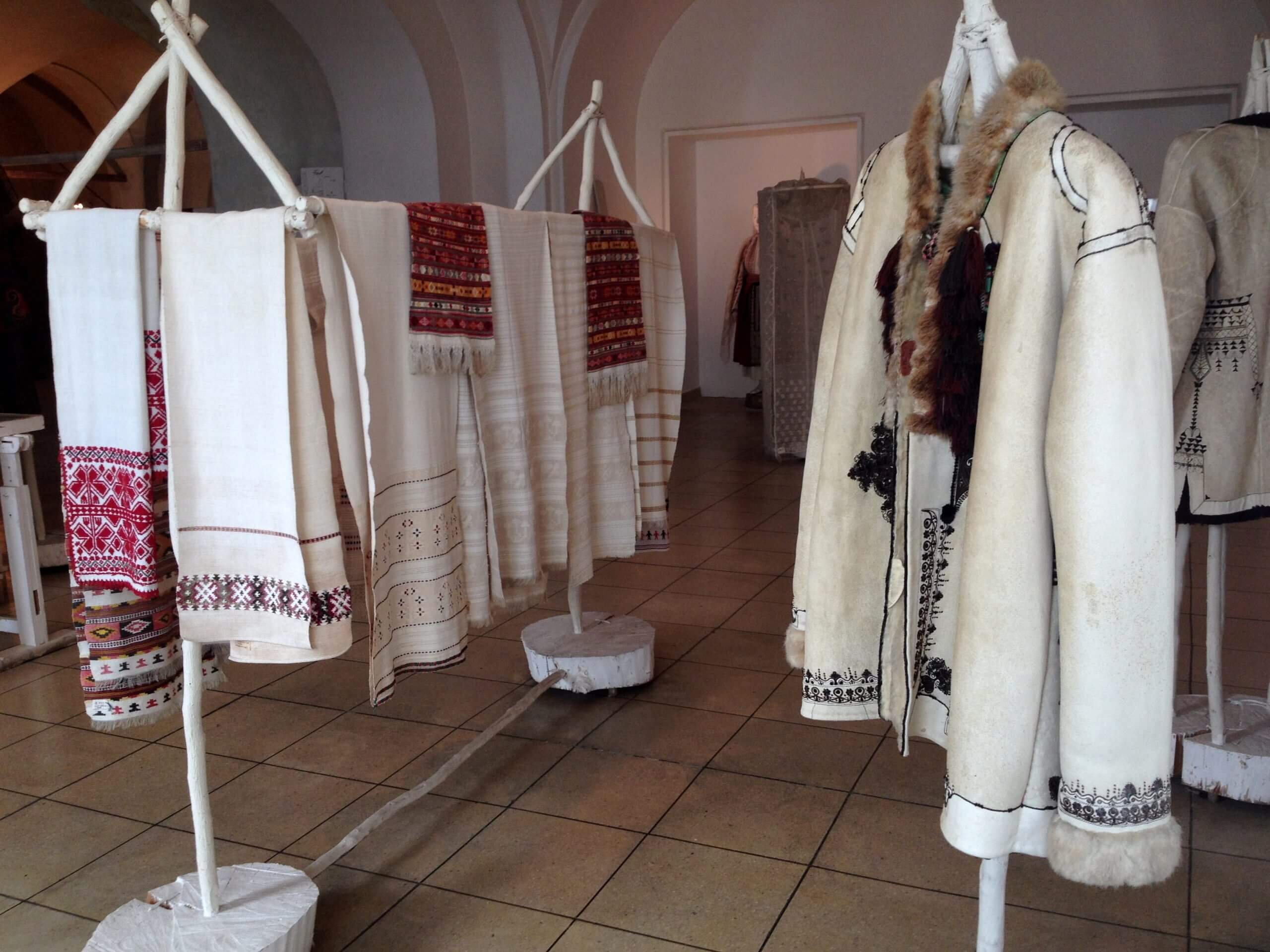
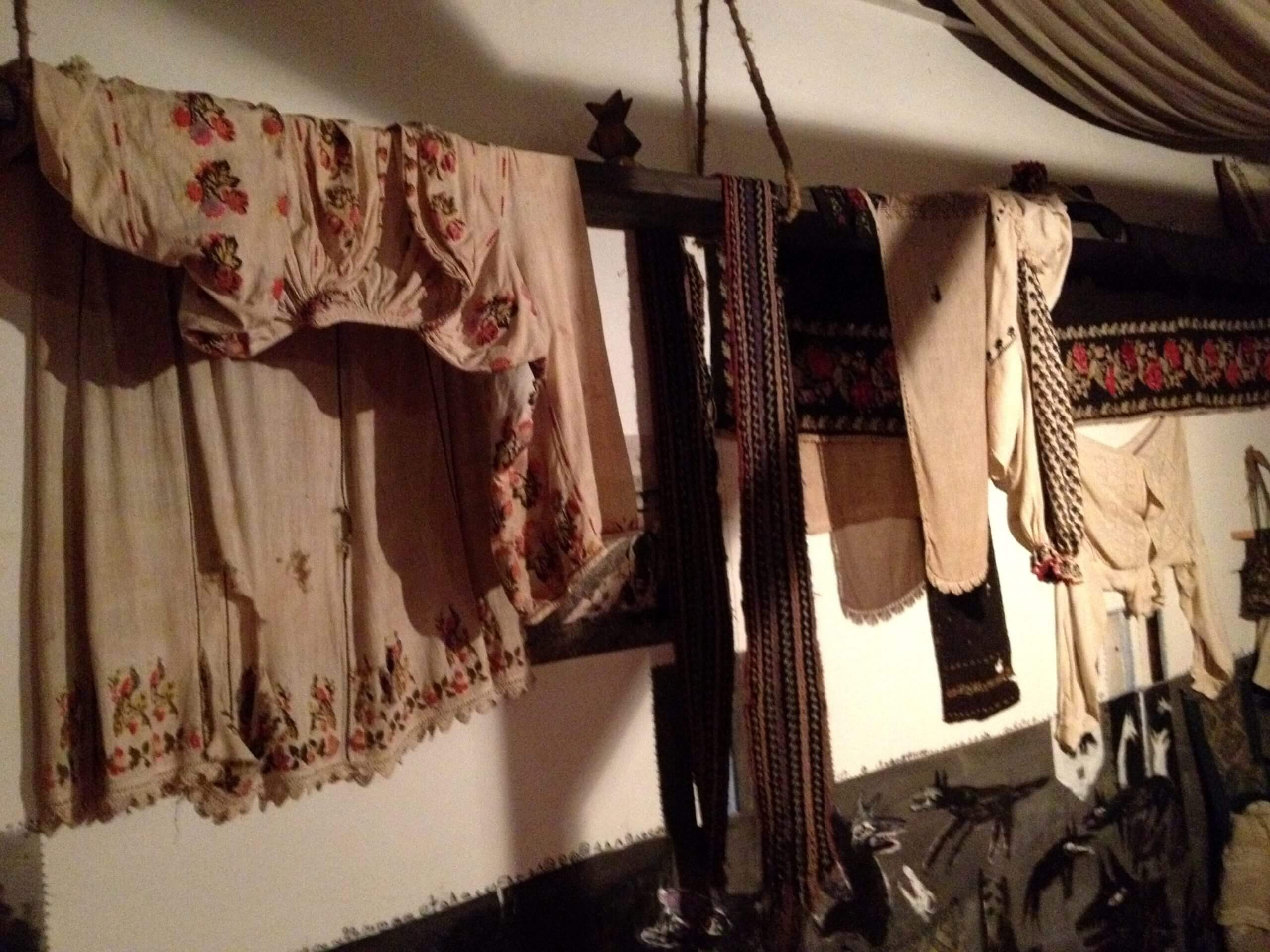
In the museum, after the object, I think the gesture is important. If I roll a towel on a cardboard tube and present it in a box, that is one thing; if I pin it to the wall so that it seems nailed, that is another. And I believe there must be a key gesture that sums them all up, the gesture by which we give value to objects, by which we declare them heritage.
Excluding the obvious, the explicit, the excessive; denying the usual approach, the commonplace.
Testing without precise formulations. Once put in a formula, things lose their latent energy. An excess of formalization in the museum discourse can lead even to the destruction of the object.
Simplicity, not the pride of aspiring to perfection. Much naturalness and submission to the object.
What truly means major and minor?
Museology works with rules based on constants of perception and on fashions. It could become a mode of general understanding. Then museification would cease to be a method, an annihilating mechanism, a recipe.
Apophatic, negative museology is, at the same time, “concrete museology”; in the sense that the discourse must act “weakly,” subtly, fragilely, in favor of things, which are “emotive symbols” and risk, through the process of museification, drying up… To transmit its full charge, an “emotive symbol,” such as things made by the traditional person, needs to be left fairly free, only lightly incorporated into an abstract discourse. The undivided person did not “produce,” but rather gave birth to objects, so everything he made could be an emotive symbol for us.
What I do is not at all irrational. It fits, perhaps, within a poetics of museography. There is a poetics of architecture; why should there not be a poetics of museography?