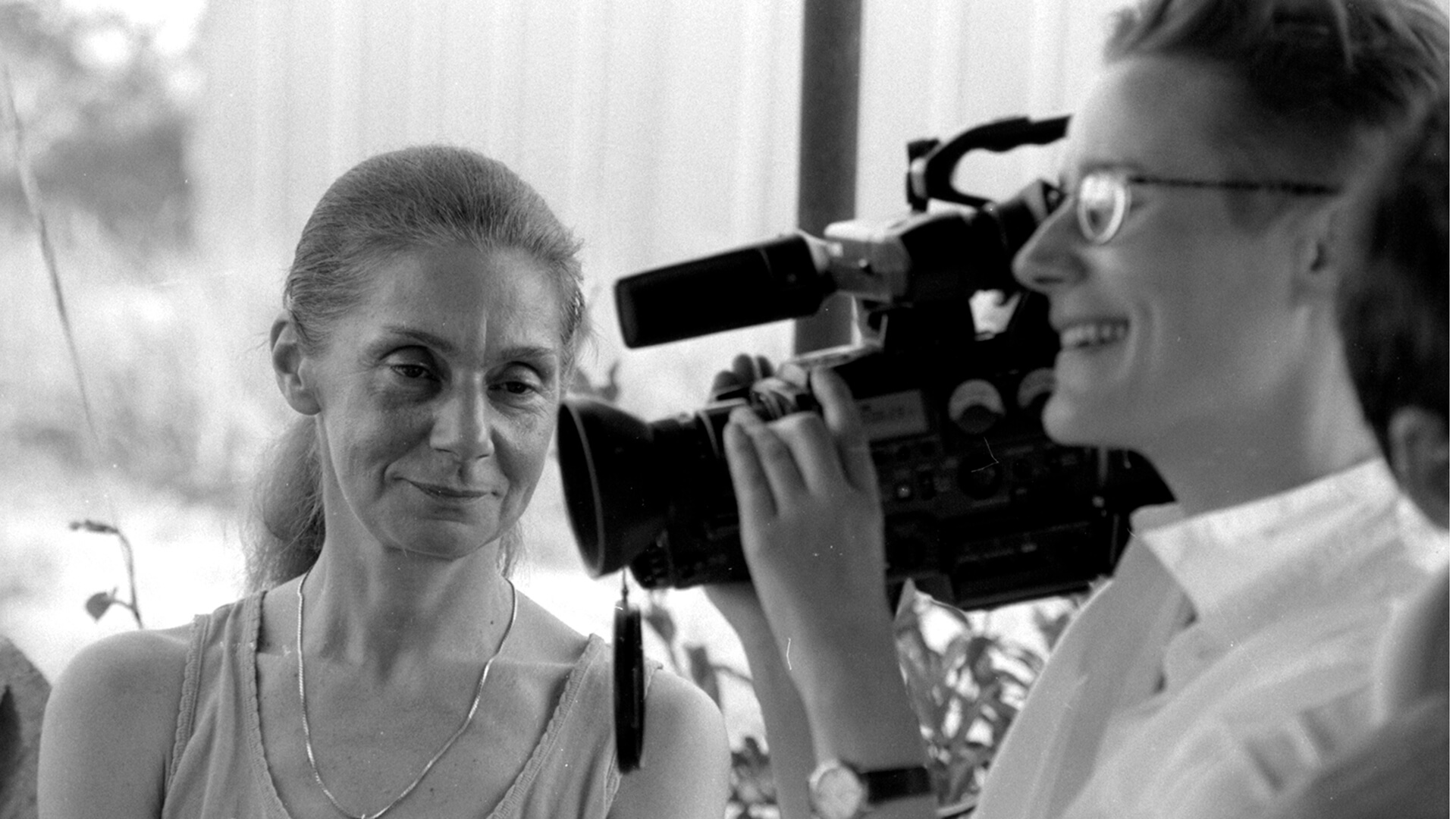
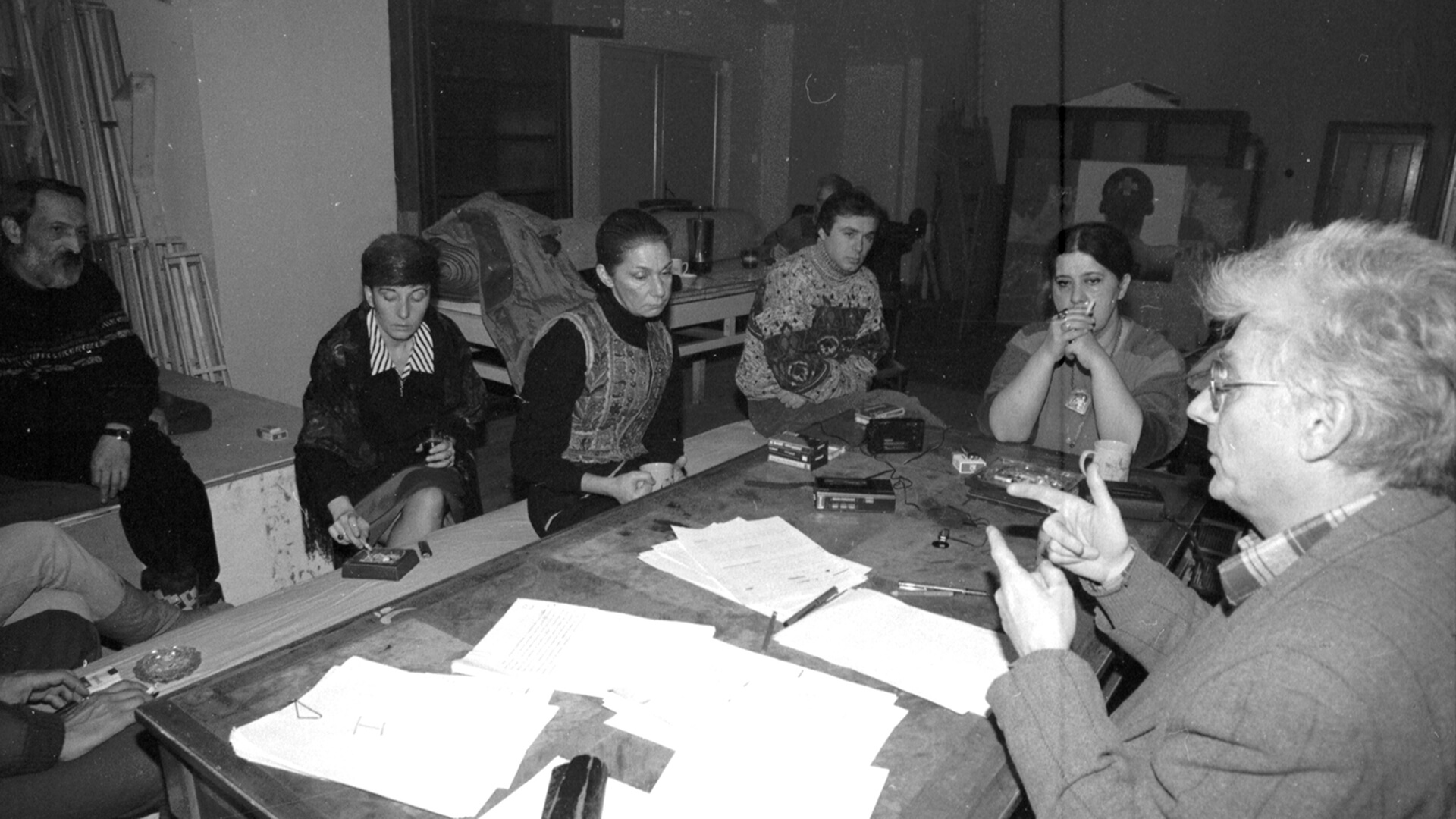

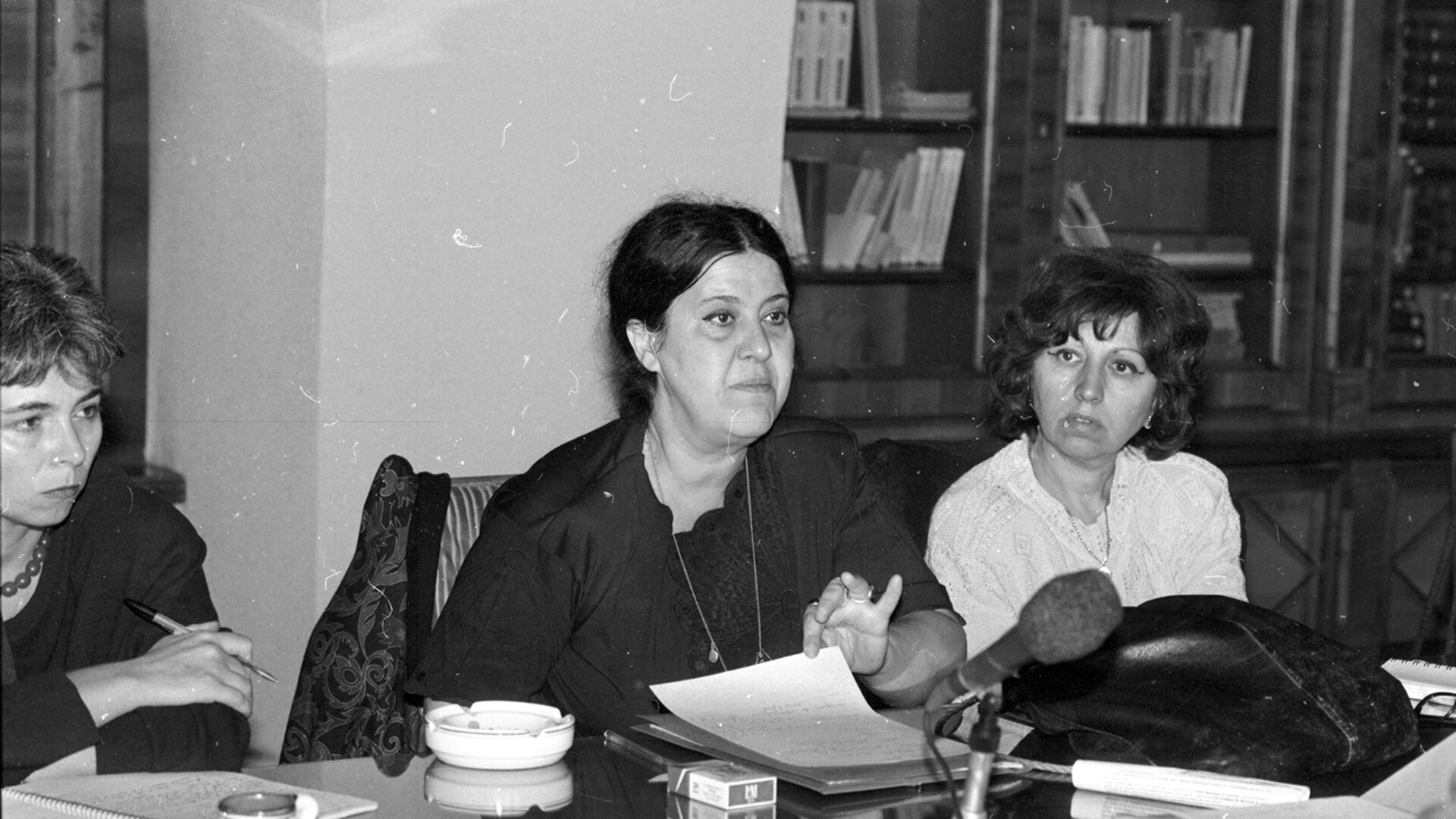
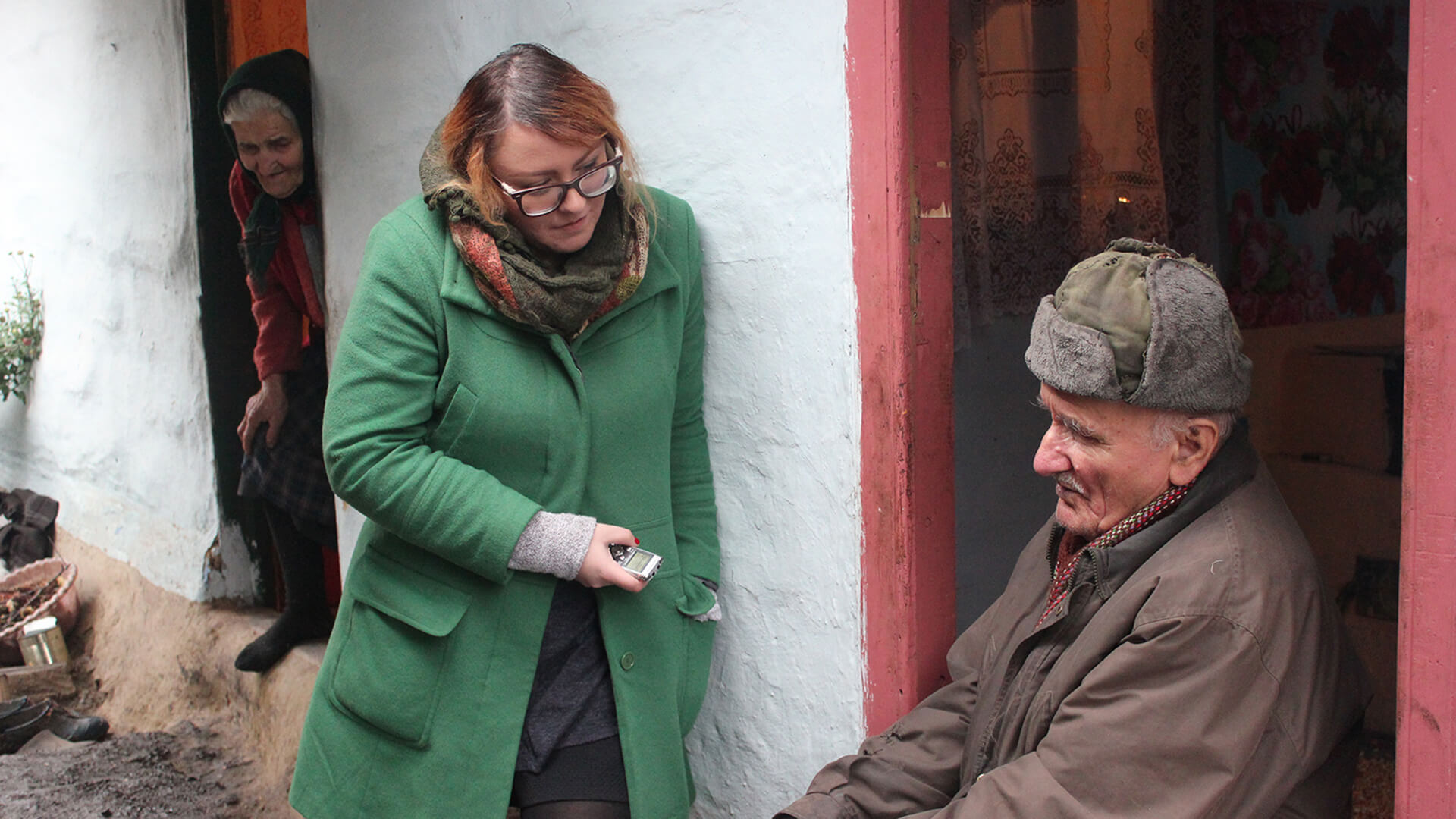
“Museum research should be something very special, not an ivory tower, but a workbench placed at the intersection of issues related to collections, exhibitions, cultural actions and publications dedicated to visitors”, said Irina Nicolau (in Irina Nicolau, Carmen Huluță, Dosar sentimental, 2001, ed. Ars Docendi, Bucharest, p. 27, here online version).
In a museum, research has the role of developing a scientific discourse that promotes and develops the museum discourse. The theoretical opening of such a discourse must always be up-to-date. In the case of our museum, the disciplines that support this discourse are mainly ethnology, ethnography, cultural and social anthropology and ethnomusicology.
At the beginning of the 1990s, newly (re)established, the Romanian Peasant Museum became, in a referential manner, the “cultural object” that re-signifies and reconceptualizes the relationship between scholarly discourse and peasant cultures. As the French ethnologist Gérard Althabe noted even then, the museum’s authors, the painter Horia Bernea and his collaborators, museographers and ethnologists, proposed a museum discourse that is no longer that of a “classical” ethnological museum, founded on the “reconstituting” of the natural, original setting of the object taken as a witness. They start from a deconstruction of the image of traditions: “ethnographic objects are detached from the social and symbolic universe (that of the traditional peasant), in which they were produced and used; the authors do not use them as witnesses of this universe; they free them from the pressure of their origin and regroup them in aesthetic compositions” (MARTOR no. 2/1997, p. 145).
The programmatic project of the museum is permanently attuned to contemporary socio-cultural dynamics. As Irina Nicolau, one of the museum’s founders, said, “Every society has the museums it demands and, ultimately, deserves. Through museums, society expresses its attitudes and strategies regarding the past. (…) In my opinion, Romanian society, at the end of this century, needs museums of healing, which address the suffering present. In the halls of our museum, the visitor does not read about how his ancestors lived, but is offered fragments of a heritage that he must perceive as his own” (MARTOR magazine no. 2/1997, p. 143).
Research connects the dynamic reality of peasant societies and the museum discourse specific to the institution, expressed in exhibition projects, spectacular projects and scientific projects. This role would be common to any research department affiliated with a museum, especially an ethnological one; in the case of the MNR there is a particularity: that of re-interrogating, flexibilizing and even recomposing the already canonical image of the “traditions” expressed as cultural heritage, as it was developed by the classical ethnographic museums. From this point of view, the disciplinary perspective of the research projects carried out is rather that of cultural and social anthropology than that of folklore studies. Consequently, the heritage construction proposed by the museum discourse of the MNR is, in turn, dynamic and capable of remaining in dialogue with each generation of the public and of integrating into the general dynamics of the Romanian national culture.
This is all the more problematic today, as the process of globalization becomes more alert. The permanent connection of the scientific discourse promoted within the MNR to the changing reality of rural cultures is intended to feed the construction of an artistic and symbolic image of them, an image subsequently integrated into the museum discourse. This image, while remaining a creative one, encompasses the present reality of traditional Romanian cultures, but also their history.
The research programs carried out within the MNR have the role of producing a current scientific discourse, correlated with contemporary international research. Thus, not only anthropological/ethnological research projects are initiated, but also interdisciplinary projects involving researchers and institutions from the country and abroad from various fields such as history, biology, geology, ethnomusicology, visual studies, etc. Some examples are: collaborations with the Biodiversity Center of the University of Uppsala, Sweden; collaboration with the Museum of European and Mediterranean Civilizations in Marseille, France; with the Institut National des Langues et Civilisations Orientales (INALCO) Paris, France; with the House of European History, European Parliament, Belgium; with the “Paisii Hilendarski” University of Plovdiv, Bulgaria; with the University of Bucharest – Faculty of Geology, Romania; with the “Sabba Ștefănescu” Institute of Geodynamics, Romania and so on.
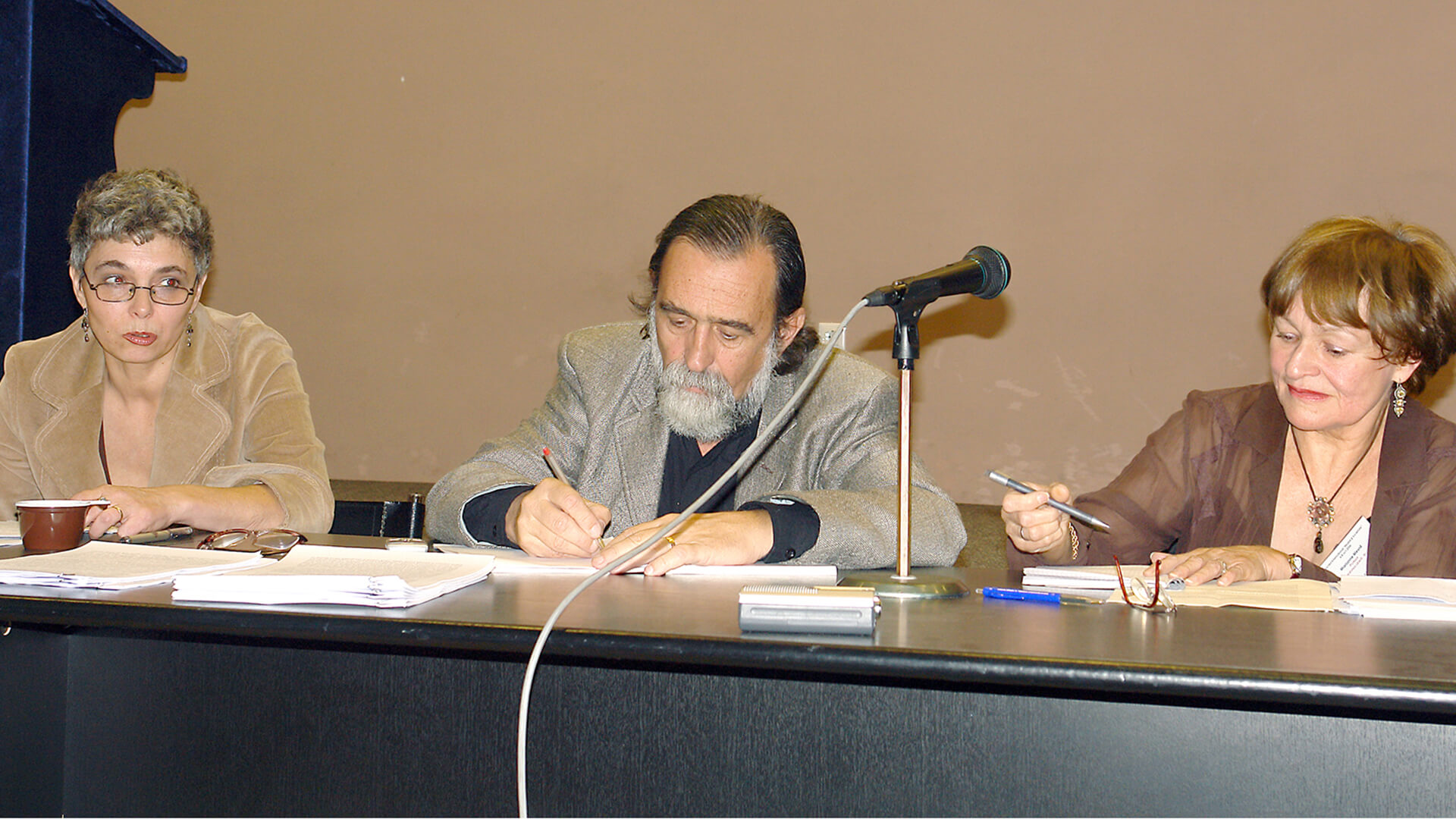
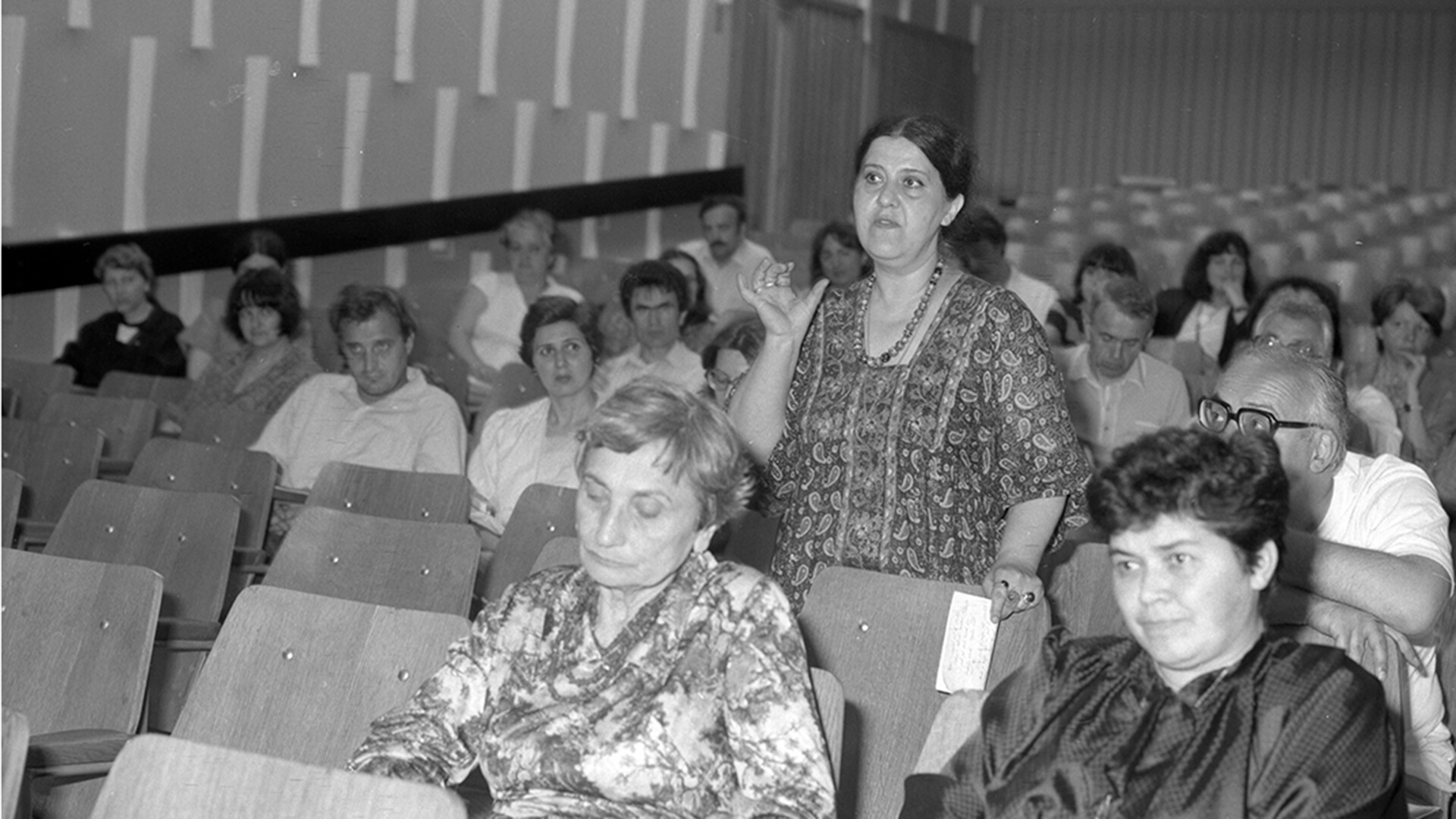
All research is archived and capitalized within the Ethnological Archive, but especially through participation in thematic exhibitions (in situ and online) organized by the specialized sections, traditional music concerts, specialized scientific meetings (conferences, colloquiums, workshops, round tables, focus-group meetings organized by the museum), participation in national and international scientific meetings, as well as through lectures dedicated to the general public.
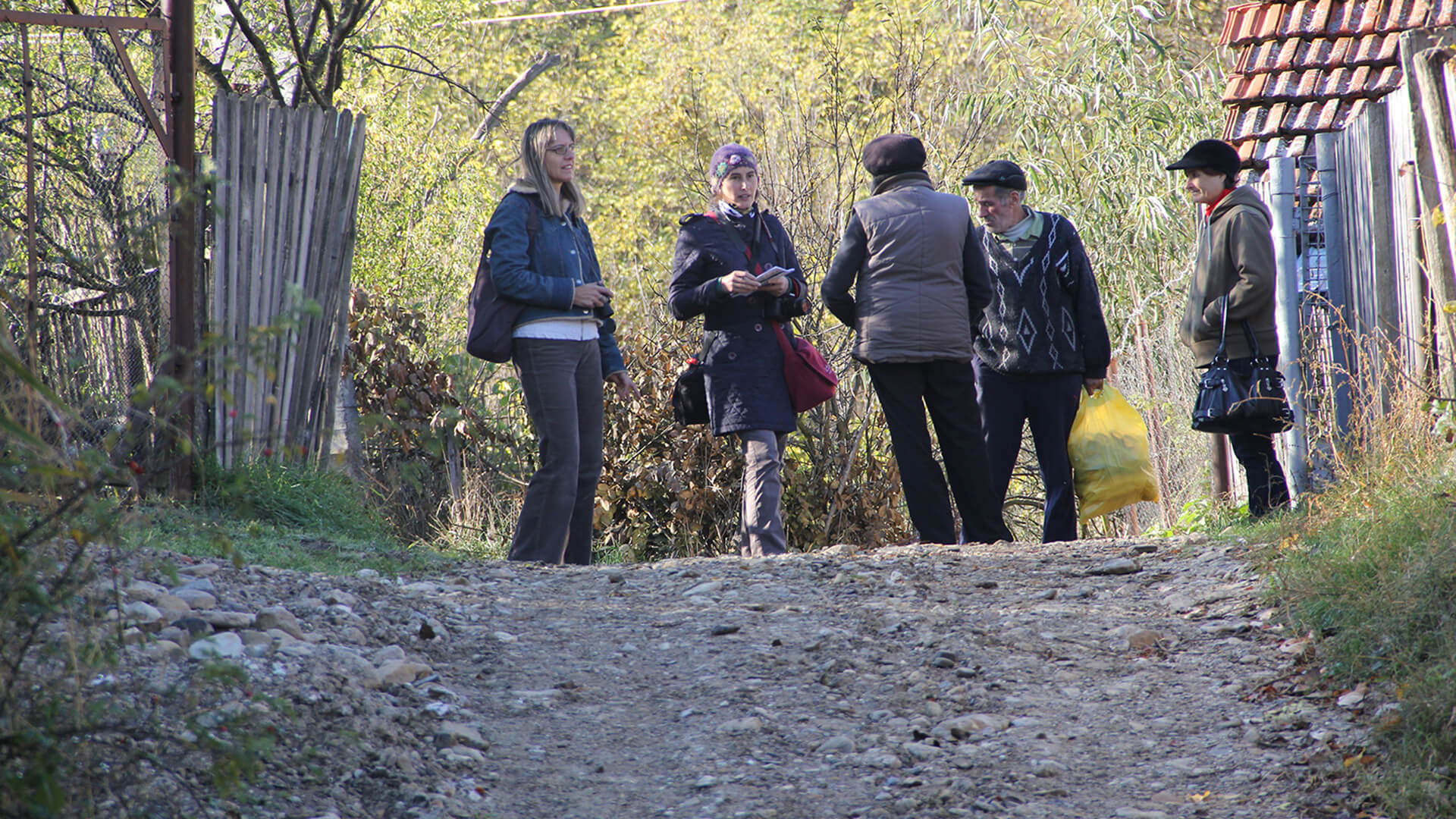
The research, carried out with qualitative techniques specific to the social and human sciences and then the communication of its results to a wider audience, has, within the MNR, the following coordinates and directions:
Ethnology of emergency. In the increasingly accentuated whirlpool of the contemporary world, defined by modernization, technology, migration, mechanization, etc., the rural world is also changing radically, characterized, until the era of modernity, by a specific oral culture, in which traditions are perpetuated across generations. Through this research direction, the MNR aims to document cultural phenomena and practices threatened by extinction or irreversible transformations.
Recent Heritage and Patrimonialization. This research program, initiated by Vintilă Mihăilescu in 2005, with the establishment of an independent department with this mission, aimed to study and promote the current heritage – rural, in particular, but not limited to it – in Romanian society, taking into account the major changes that this field has experienced in recent times. A team formed by historians, ethnologists and anthropologists studies patrimonialization as a complex social process, which involves individual, collective and institutional actors and which cannot be understood without analyzing the diverse meanings of heritage and the various stakes of its valorization and protection.
Peasant Cultures in Their Dynamics is a research direction that focuses on aspects of peasant culture in their historicity. The reproductions of institutions, domains, practices, customs or phenomena related to what is generically called “tradition” are documented, perceived, following Richard Handler and Jocelyn Linnekin (1984), as a dynamic process in which continuity and change are found. This program includes studies on different ethnic groups and studies of traditional phenomena and aspects, in its institutional and non-institutional forms.
The Instrumentalization of Traditions is a program that hosts research projects that propose the analysis of aspects of contemporary society (practices and discourses, such as festivals, competitions, radio or TV shows) that can be directly linked to a rural cultural source. This opens up the possibility of analyzing the reproduction of the domain of “traditions” and its meanings in contemporary society.
Recent history. Since the beginning of the museum, the documentation of the recent past has been considered a main axis of research. Studies in this field are carried out using specific research techniques of oral history and then bring historical events (World War I or II, collectivization, anti-communist resistance, the transition years, etc.) to the attention of the public from the perspective of direct participants in the events, starting from the events imprinted in their memory, or in the documents they left behind.
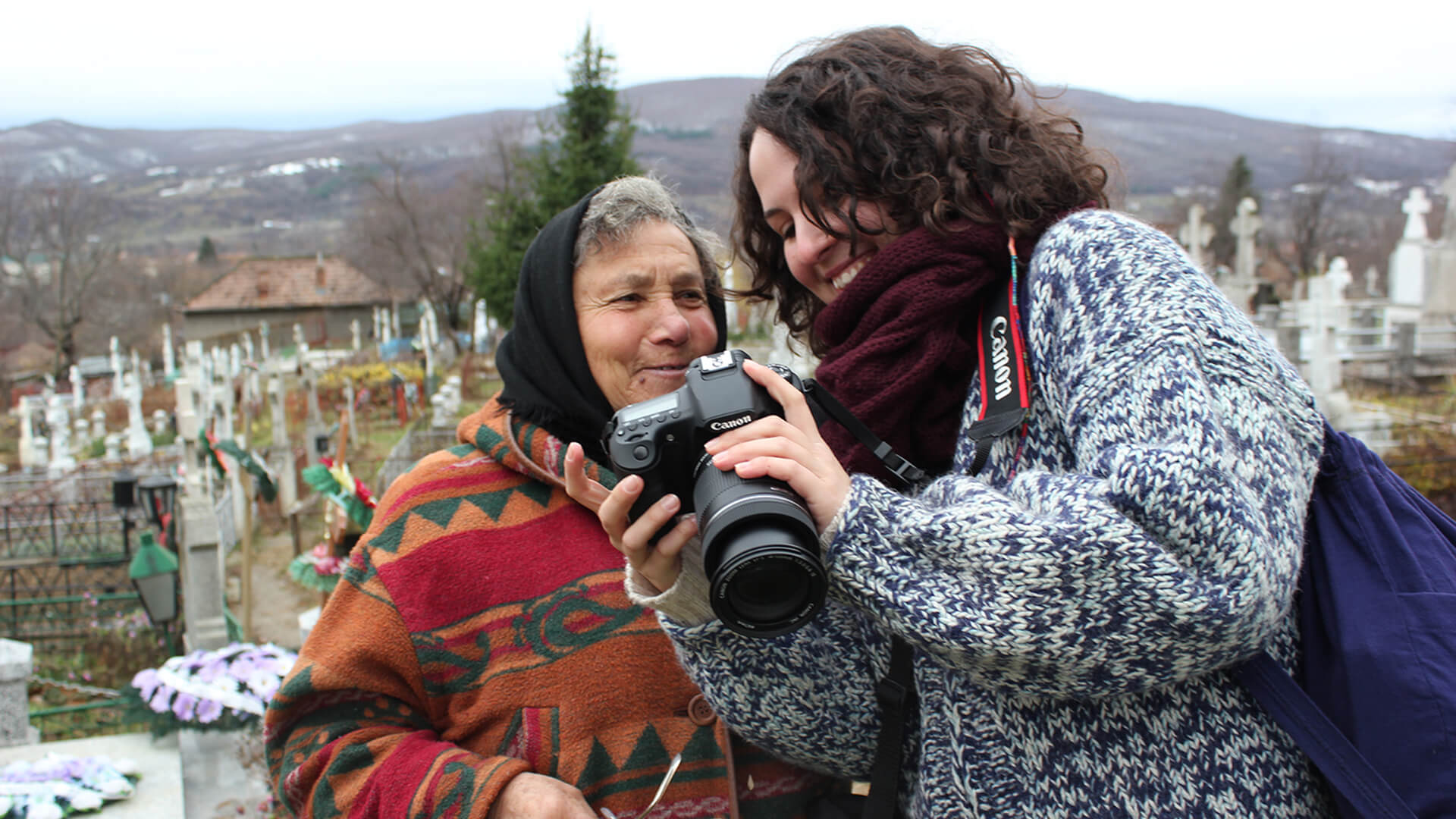
Visual anthropology is a constant research direction, since the beginning of the museum, which is part of the broader field of anthropology, both from a methodological point of view (the use of photography and film as a witness, but also as an object of reflection), and in the communication of research results. Compared to the written text, the results of this research have a greater impact on the general public, going beyond the academic audience. The interest in visual anthropology is found in most of the activities carried out by the museum, from the exhibitions in which the research materials are capitalized, to the way in which the publications are designed from a graphic point of view.
Research and education. Many of the cultural projects carried out by the museum include a research component, the results being then made available to the specialized public, but also to the general public, through various actions that belong to museum education: conferences, lectures, exhibitions, book launches, but also creative activities for children and young people.