
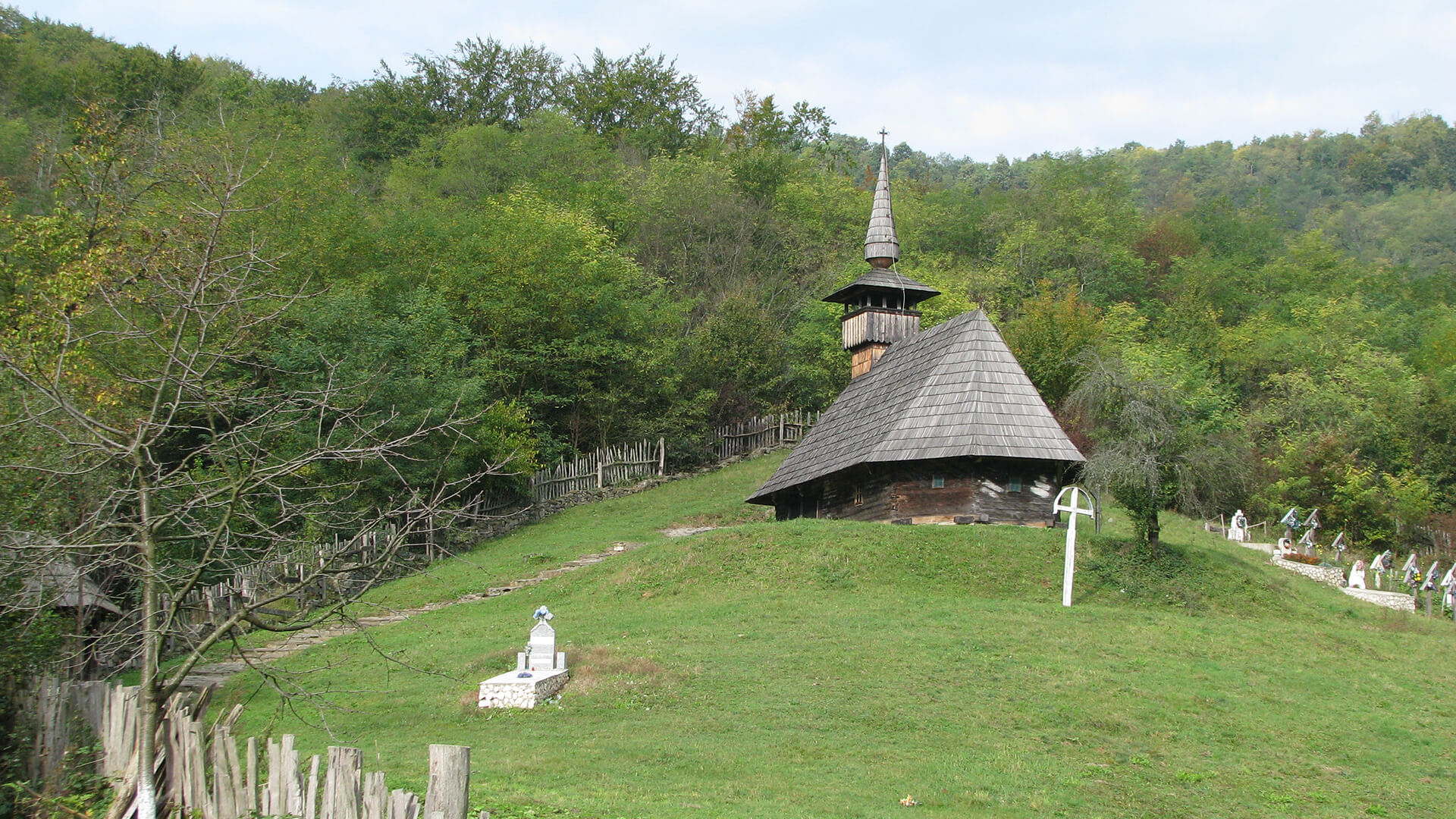
A collective work, often anonymous, wooden churches are a reflection of socio-economic and historical conditions, a convincing demonstration of the continuity of a spiritual life with ancient traditions. They are documents of unquestionable authenticity not only through the elements of their appearance—which reflect the unity of the Romanian people—but also through the role they have fulfilled in the life of Transylvanian Romanians: national forum, school, center of culture and art, realities whose meaning harmoniously intertwines with their attribute of being community foundations.
In other words, wooden churches represent a defining reality for the spiritual geography of the Romanian people everywhere.
Wooden churches unequivocally reflect Romanian unity, fully supporting the assertion of the great historian Nicolae Iorga: “the multifaceted creation of our people is the same throughout all the provinces,” while also being a convincing testimony “that Romanians have always felt at home everywhere in the great Carpathian space, and, unfortunately, even in modern times, the process of alienation from ancestral possessions and denationalization has been carried out to the detriment of our people.”
Among the historical aspects for which the wooden church stands as an eyewitness, we highlight that regarding the ethnic process that occurred in Transylvanian settlements under the given historical circumstances. Impoverished, deprived of rights and the possibility of maintaining their own schools, after long resistance, they were either denationalized or driven from their ancestral lands.
For Romanians in the villages along the Mureș, Arieș, and Târnava rivers, wooden churches are witnesses to the serious consequences of denationalization actions to which they were subjected, often accompanied by religious persecution. That is why they also saw in these wooden places of worship symbols of hope for national liberation.
From this perspective, we can understand the remarkable value of the churches along the Mureș: from Porumbeni, where the script of the 16th century is preserved in wood, to that of Văleni (formerly Oaia), built in 1695–1696 under archpriest Toader “at the encouragement and with the expense of the entire village,” to that of Păcureni or Valea (formerly Iobăgeni), rebuilt “by the honorable villagers in place of the ruined one,” or that of Sântandrei–Miercurea Nirajului.
Wooden churches have brought from deep within history construction systems, floor plans, decorative patterns, and elements that have given them the status of documents of the formation, existence, and endurance of the Romanian people and their creative spirit.
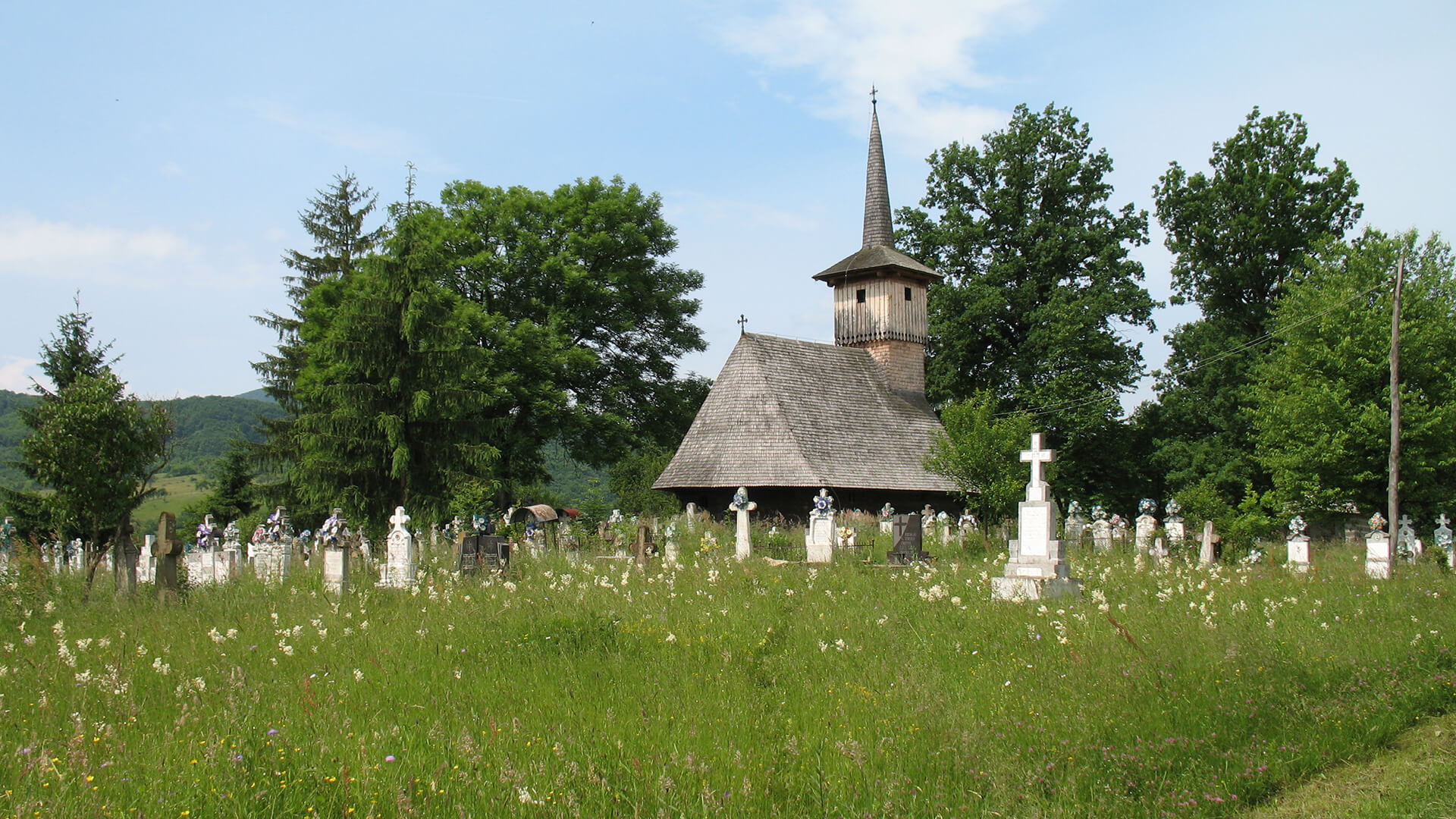
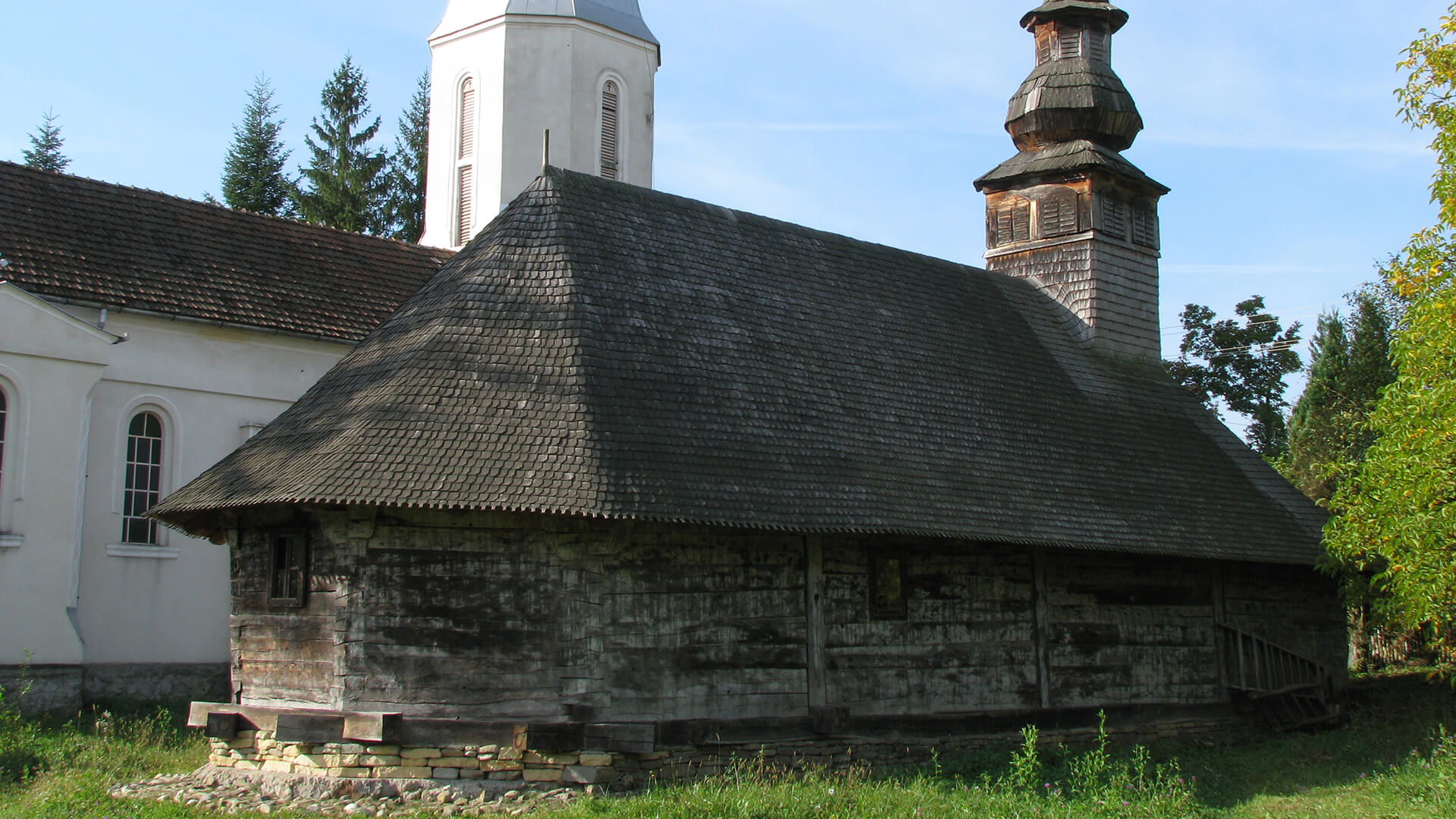
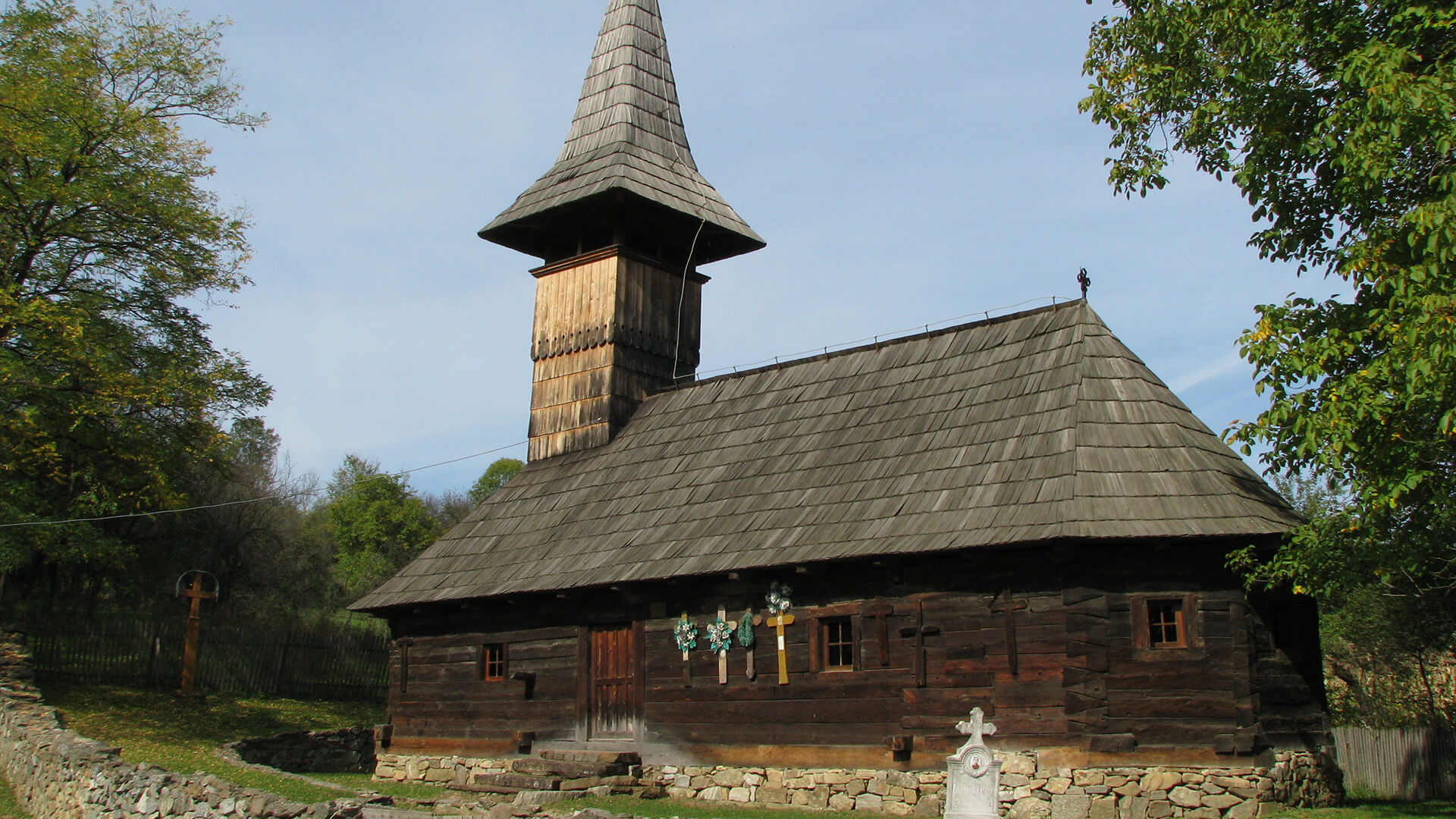
Being peasant creations, they share many features with the traditional house: similar dimensions, built from the same raw material (wood), with the same techniques (“blockbau” or “in crowns”). Regarding the construction plan, wooden churches (like stone churches) include: the narthex, nave, and altar, laid out on the longitudinal axis, sometimes with the addition of a porch or gallery (as is common in Transylvania and sometimes in Oltenia, Muntenia, or Moldova). These monuments have remarkable architectural unity, where the skillful use of space is manifested in lines and volumes that express strength and grace, boldness, but also balance and proportion.
The decoration of wooden churches is also similar to that of peasant houses (from the massive wooden sills, whose ends are often carved in the shape of a stylized horse's head, to the rafters supporting the eaves, we find the same ornamental system). Thus, alongside linear motifs and geometric compositions (rhombuses, circles, rosettes), we find vegetal motifs (flowers, vines, trees) created by carving or painted in polychromy. Decorations related to religious symbolism—almost always pictorial (faces of saints, angels, scenes from the Christological Cycle, etc.) painted by peasant artists—obey the same laws of balance and measure.
Some aspects related to execution technique or iconographic arrangement are dictated by the special forms of wooden architecture and the way the material is prepared to serve as a support for a “lasting adornment.” The painted registers generally include the iconostasis and icons, the altar, vaults, or donors' portraits. As painting techniques, tempera applied directly to wood, tempera on canvas, tempera on gessoed wood, or even fresco on plastered wood are frequently encountered.
The painting ensembles of the wooden churches in Arad (Groșii Noi, Julița, and Troaș) and Hunedoara (Lunca Moților and Bejan), which are the subject of this presentation, dating from the 18th and early 19th centuries, are eloquent proof of the mastery of peasant-painter craftsmen.
Although originally the iconographic ensemble of these churches was quite rich, today only scenes from the Christological Cycle remain: the Last Supper, the Judgment and Mocking of the Savior, the Way to Golgotha, Carrying the Cross, the Crucifixion, and the Lamentation.
Also preserved in a few medallions are moments from Genesis, the figure of Mary with Child or the Orant Virgin flanked by archangels and angelic hosts, portraits of prophets and martyrs within arcaded decorations, archangels Michael and Gabriel surrounded by angelic hosts.
Stylistically, the painting in these churches represents a synthesis between Byzantine and Gothic (gradually, the Gothic component becomes less prominent while the Byzantine becomes more accentuated, against the background of new conditions in the evolution of Romanian society in Transylvania, which could maintain active relations with the Romanian Principalities, where the development of the arts benefited substantially from Byzantine experience).
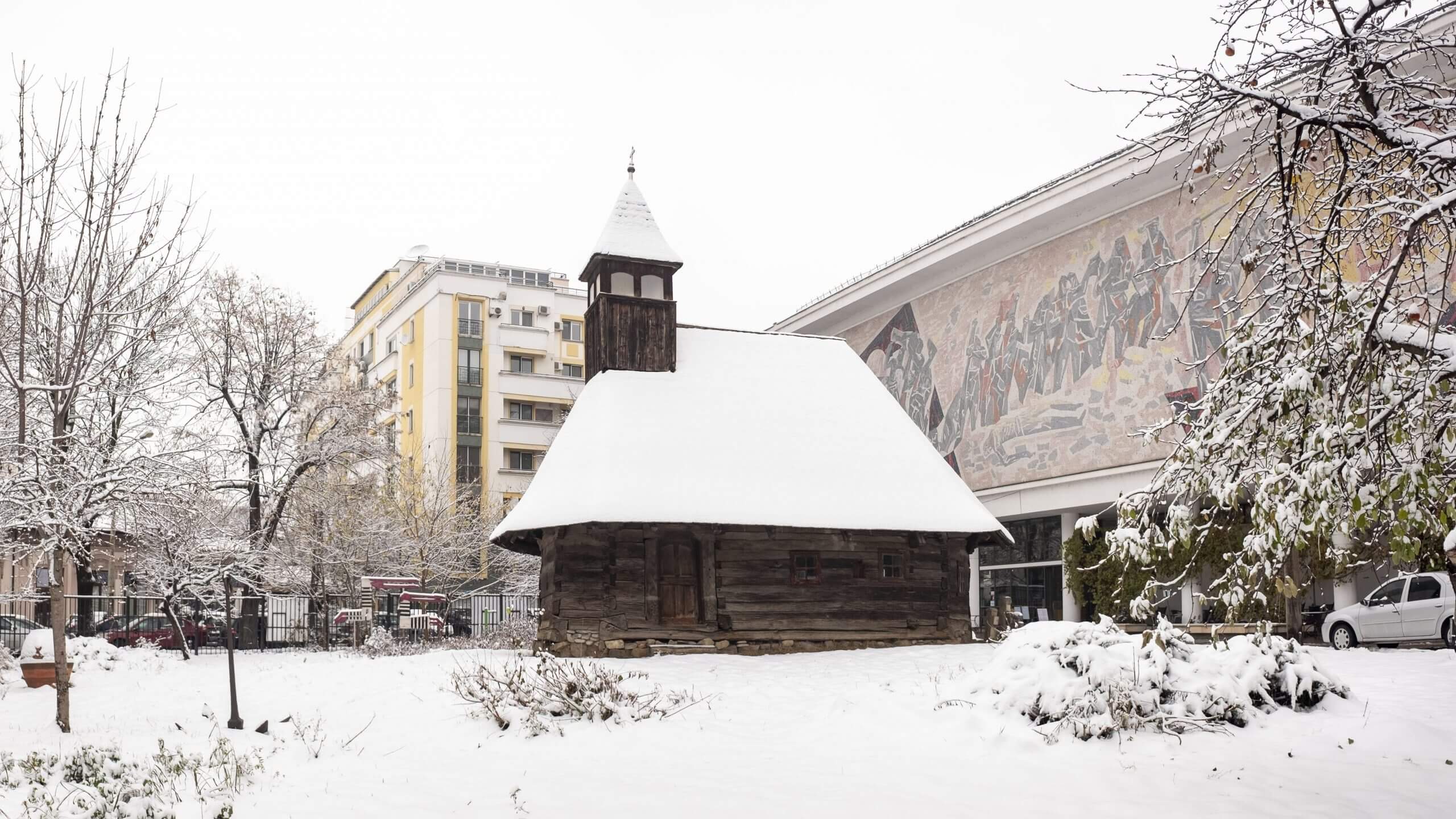
The small “architectural reserve” made up of the wooden churches of Groșii Noi, Julița, and Troaș (Arad) and Lunca Moților (Hunedoara), under the protection of the National Museum of the Romanian Peasant since 1991, is part of a broader museum plan aimed at reestablishing the connection with the land and with the institutions of the traditional village.